Are We Becoming an Always-Alert Society?
Sleep problems are no longer only a bedroom problem. They are increasingly becoming a modern lifestyle and public-health problem. More than a decade ago, a large study from the INDEPTH WHO-SAGE collaboration asked a provocative question: are sleep problems becoming an emerging global epidemic? The study, involving more than 40,000 older adults across eight populations in Africa and Asia, including India, highlighted sleep disturbance as an important and under-recognised global public-health issue. Today, in 2026, that question feels even more relevant.
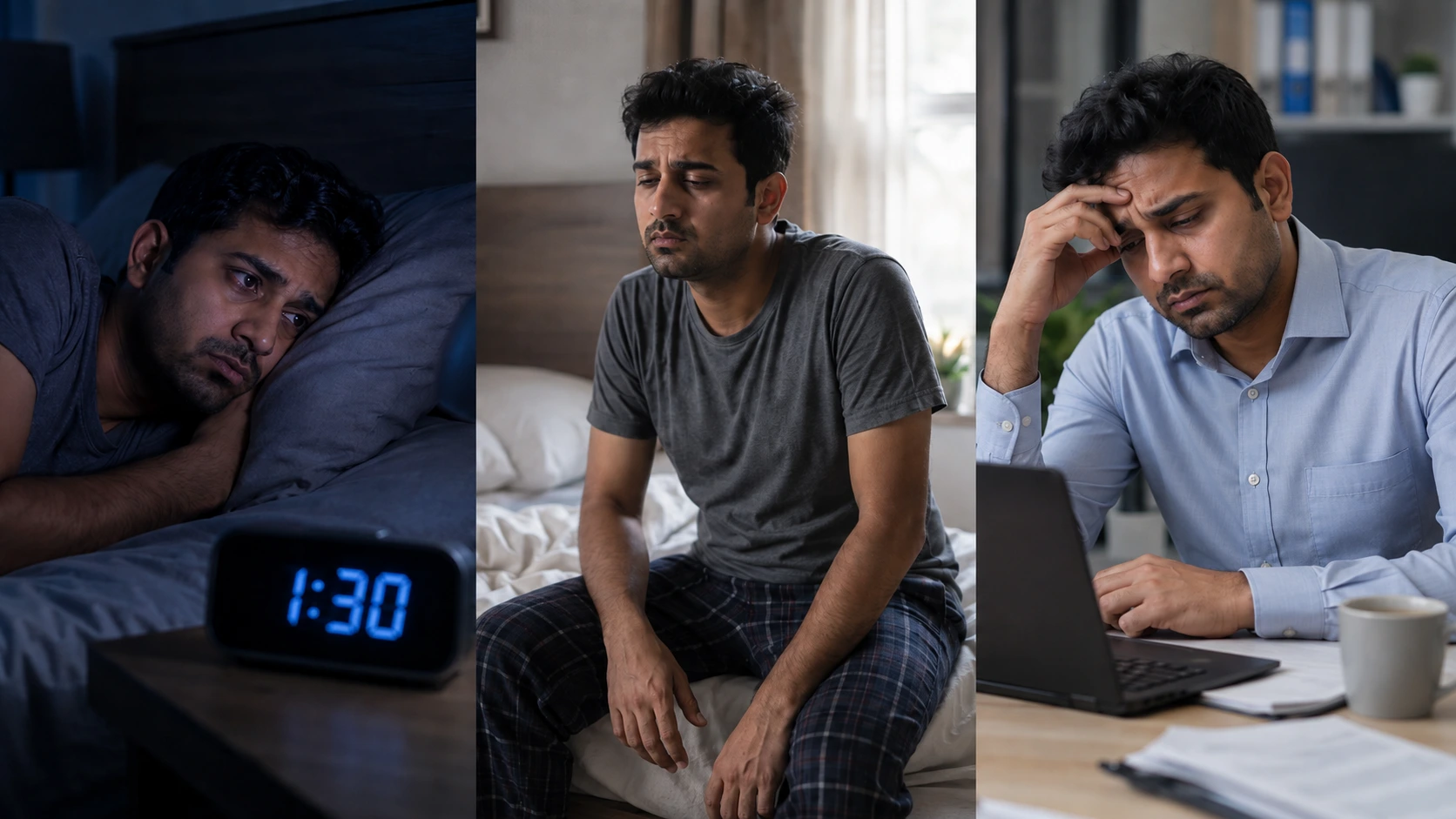
We have better mattresses, sleep trackers, healthier food choices, gyms, meditation apps and more information about sleep than perhaps any generation before us. Yet a new kind of sleeper is emerging. They sleep and wake at reasonably regular times. They exercise. They try to eat healthy. Some get morning sunlight. Some have already reduced caffeine and screen time. And still they cannot sleep deeply. They get into bed tired, but the mind remains active. They fall asleep late. They wake at 2 AM or 3 AM and the thinking immediately starts again. Or they sleep for seven or eight hours and still wake feeling as if the night never properly restored them.
So why can’t we sleep even when we are tired, exercising regularly, eating healthy and going to bed on time?
So perhaps the modern sleep epidemic can no longer be explained only by “you are not following good sleep hygiene.” Something deeper may be happening. We may be creating an Always-Alert Society.
From Trunk Calls to an Omnipresent Life
To understand modern sleeplessness, go back just a few decades. Before the 1980s, if you wanted to speak to someone in another city, you might book a trunk call and wait. Then came the landline. Communication became easier, but the telephone still stayed inside your home or office. Once you stepped outside, you were largely unavailable. Television had timings. Shops closed. Offices closed. Newspapers were finished once you reached the last page.
There were natural gaps in life — waiting, walking, talking, sitting quietly, doing absolutely nothing. Life was certainly not stress-free. People had financial worries, family problems, illnesses and career pressure then too. But availability had boundaries, and those boundaries inadvertently created periods of recovery.
Around 2000: We Became Connected
Then the digital revolution arrived. Mobile phones entered our pockets. Email entered offices. Internet entered homes. Satellite television expanded entertainment. Twenty-four-hour news became normal. Work slowly started escaping from the workplace. The office could now call you while you were travelling home. Clients could email after dinner. International companies connected Indian professionals to multiple time zones. The world became more productive. But our nervous system quietly lost something: a clear ending to the day.
2026: We Have Become Almost Omnipresent
Today, your smartphone is no longer simply a phone. It is your office, television, newspaper, bank, shopping mall, camera, entertainment system, social network, classroom, health tracker and increasingly your AI assistant. Someone can reach you almost anywhere. Something can entertain you at any hour. Something can worry you at any minute. Something can remind you that somebody else is achieving more. And something can always demand your attention.
The great technological revolution gave us extraordinary connectivity. But perhaps it also created an unintended biological consequence: continuous alertness.
The New Modern Sleep Equation
Look at how the equation has changed. Pre-1980, the formula was roughly stress plus natural pauses, movement, human connection and strong day/night boundaries — the nervous system became activated when life required it, but everyday life also contained periods of slowing. Around 2000, it shifted to mobile phones plus internet, global work, longer availability and 24-hour media — the natural recovery windows began shrinking. By 2026, it has become constant notifications plus high aspiration, work pressure, traffic, infinite entertainment, social comparison, global uncertainty, environmental stress, less downtime and circadian disruption.
Put simply: more stimulation, more pressure, more availability and more uncertainty, combined with less recovery, equals more alertness. Repeated every single day, that becomes alertness multiplied by repetition — an always-alert nervous system. And this may be one of the missing pieces of the modern sleep epidemic.
What Is Keeping the Modern Mind So Alert?
It is rarely one thing. It is the accumulation of everything. The More-More-More Life. We live increasingly aspirational lives — better marks, better college, better job, better salary, bigger house, faster growth, higher targets, better body, more followers, more experiences, more success. Aspiration itself is healthy. But when aspiration becomes a continuous feeling of “not enough yet,” the mind rarely receives the opposite message: for today, I have done enough. The brain remains in anticipation — what’s next, what more, what am I missing, who is ahead, what happens if I fail. The future becomes more psychologically important than the present.
Constant Notifications. Then come the notifications — WhatsApp, email, Teams, Instagram, news, calendar, bank alerts, school groups, family groups, work groups, another message, another red dot, another vibration. A notification does not automatically create a cortisol spike every time. But it does repeatedly teach the brain something: that something may require your attention. The human brain becomes very good at what it repeatedly practises, and modern humans practise checking hundreds of times a day.
High-Pressure Work and Daily Friction. Then add work: targets, deadlines, performance ratings, job insecurity, competition, EMIs, business pressure, children’s education, ageing parents, financial goals, global meetings, career expectations. Ordinary life itself often feels harder too — traffic, noise, queues, delayed flights, pollution, customer-service battles, technology problems. None of these individually needs to become a major crisis. But together they create dozens of small periods of tension, frustration, worry and urgency. One problem ends. Another starts. The nervous system keeps moving.
Infinite Entertainment. Even entertainment doesn’t always calm us. Finally the day ends, we want to relax, so we open Netflix — and watch murder, crime, psychological thrillers, war, revenge, political debates, breaking news, cliff-hangers deliberately designed so that we cannot resist the next episode. We call it relaxation. But an already activated brain may experience much of this as more stimulation. And because entertainment is now available on demand, there is no natural ending. The television no longer says “goodnight.” We have to say it ourselves.
Less Human Connection. Something else has quietly changed too: we can be connected to a thousand people while sitting alone. Family dinners compete with phones. Friends send reels instead of meeting. Couples lie beside each other looking into separate screens. Human connection gives us something technology cannot fully reproduce — belonging, emotional safety and the experience of not carrying life alone. The modern world gave us more contacts. We should ask whether it also gave us more connection.
The Whole World in Our Bedroom. War in another continent, economic instability, political conflict, a natural disaster, a market crash, extreme weather, a terror attack — within seconds, it reaches the phone beside our pillow. Humans have always lived with uncertainty. What is historically unusual is the ability to experience the world’s uncertainty continuously and visually throughout the day. We are locally safe while psychologically processing global threats. Underneath all this lie environmental pressures that can also disturb recovery — hotter nights, humidity, pollution, noise, extreme weather. The external world itself sometimes becomes harder to switch off from.
And Then We Confuse the Body Clock
Now place poor circadian rhythm on top of everything else — indoor mornings, little sunlight, irregular waking, late dinners, bright evenings, weekend sleeping-in, shift work, international travel, late-night calls, streaming until midnight. So when bedtime finally arrives, two things may be happening simultaneously: the body clock is saying “I am not completely sure it is nighttime,” while the nervous system is saying “stay alert, there may still be something to deal with.” No wonder sleep struggles.
The New Sleepless Person of 2026
There is something different about many people struggling with sleep today. They are not necessarily ignoring their health — for years, we told people to exercise, eat healthy, wake consistently, sleep on time, avoid late coffee, reduce screens, get sunlight, and many of them are already doing exactly that. All of these remain important. But today we increasingly meet people who say, “I am already doing all of this. Why am I still not sleeping?” Perhaps because they fixed the behaviours around sleep, but their nervous system is still living inside alertness.
The Glacier of Alertness Chemistry
Imagine a glacier high in the mountains. A little water melts. It becomes a stream. The stream becomes a river. And when that river flows continuously, the landscape begins forming around it. Now imagine modern stress in the same way — a deadline creates activation, then a financial worry, then traffic, then an argument, then a notification, then tomorrow’s target, then a frightening news story, then overthinking in bed.
The body uses powerful chemical systems — including cortisol, adrenaline and noradrenaline — to help us respond when alertness is required. These hormones are not enemies. Cortisol is essential for life. But a nervous system repeatedly practising stress and vigilance can gradually become conditioned toward hyperarousal. So we should not literally say “the body becomes addicted to cortisol.” A better way to understand it is that the body becomes familiar with alertness chemistry. And what becomes familiar becomes easier to return to.
When Alertness Becomes the New Normal
Repeat the same pattern every day — wake into stress, rush, check, react, solve, compete, worry, scroll, plan, repeat. Eventually something interesting may happen. The stressful event disappears, but the body remains restless. You finally take a holiday, but cannot relax. The laptop closes, but the thoughts continue. There is no immediate crisis, but internally something still feels unfinished. The outside stimulus stopped. The inside pattern didn’t.
And the Alert Body Keeps an Alert Mind
The nervous system and brain continuously influence each other. When the body remains activated, the mind often continues planning, predicting, analysing, replaying, checking, anticipating — what if, what next, what did I forget, why am I not sleeping. Research into chronic insomnia describes this broader phenomenon as hyperarousal, involving cognitive, physiological and cortical activation — including higher-frequency, beta-range EEG activity that has been reported around sleep onset and during sleep in people with insomnia. In simplified Sleep Gurukul language, we call the mental experience the High Beta Alert Mind. It doesn’t mean that every neuron in the brain is literally locked into one brain-wave frequency. It describes something every overthinker immediately recognises: the brain is still in doing, solving, watching and anticipating mode.
But Sleep Needs a Different Direction
Sleep does not happen by keeping the brain in maximum alertness. As normal sleep begins, waking brain activity gradually changes. Early sleep includes more theta-range activity, while deeper N3 sleep is characterised by slower delta activity. In simple terms, an alert mind needs to gradually become a quieter mind before it can move towards deep restorative sleep.
Now imagine the modern evening: 10:57 PM, office WhatsApp; 11:04 PM, Instagram; 11:13 PM, a thriller; 11:42 PM, breaking news; 11:55 PM, check tomorrow’s calendar; and at midnight — “Okay brain, sleep now.” We have spent sixteen hours pressing the accelerator, and then become surprised that the vehicle needs more than ten seconds to stop.
Welcome to the Chakravyuha of Sleeplessness
This is why the metaphor of the Chakravyuha is so powerful. In the Mahabharata, Abhimanyu knew how to enter the Chakravyuha — the challenge was knowing how to get out. Modern humans have become extraordinarily skilled at entering Alert Mode. Technology teaches us. Targets teach us. Traffic teaches us. Competition teaches us. News teaches us. Aspiration teaches us. Notifications teach us. But who taught us how to come out? This is the modern Chakravyuha of Sleeplessness: modern lifestyle and circadian disruption leads to an alert nervous system, which produces stress and alertness chemistry, which creates the High Beta Alert Mind, which delays and fragments sleep, which leads to poor recovery, which brings fatigue, stress and overthinking the next day, which creates even more alertness — and the cycle repeats.

The Chakravyuha of Sleeplessness: how daily patterns can repeatedly train the brain and body toward alertness, making natural recovery increasingly difficult.
Why We Fall Asleep Late
Stress, overthinking, an alert nervous system and a disrupted circadian rhythm can all contribute to difficulty falling asleep, waking during the night and feeling tired the next morning. Here’s how that plays out across an actual night.
Now the person enters bed. The body is tired. But the mind is still running. Then the person notices: “I haven’t slept yet.” They check the clock. 11:47. 12:15. 12:43. Now sleep itself becomes another task, another target, another thing that must be achieved. “I HAVE to sleep.” And the harder the person tries, the more attention the brain gives to being awake. The alertness loop gets another turn.
Why We May Wake in the Middle of the Night
Eventually sleep comes. But sleep does not remain in one stage throughout the night — the brain naturally cycles through lighter sleep, deeper NREM sleep and REM. Brief awakenings can occur normally. The difference is what happens next. For a calm sleeper, consciousness may briefly appear and disappear again. For an alert sleeper, one moment of wakefulness can restart the entire mental network — tomorrow, money, work, relationship, health, and finally: “Oh no, I am awake again.” Now the problem is no longer merely waking. It is what the alert brain does after waking.
Why the Next Day Feels So Exhausting
Deep sleep is an important period of physical restoration, while sleep more broadly supports memory, emotional processing, immune function, metabolism and many other aspects of recovery. When sleep is repeatedly shortened or fragmented, we may wake without feeling properly restored. Then comes daytime sleepiness, low energy, brain fog, lower motivation, poor concentration, irritability and greater emotional reactivity. And because the day feels harder, we may compensate with more caffeine, more sugar, less movement and more easy digital stimulation — which can feed the next night. And so the Chakravyuha becomes stronger.
How Do We Begin Coming Out?
The solution is not to remove ambition, or stop working hard, or throw away technology. It is to recover an ability modern life is quietly weakening: the ability to switch states. Be alert when alertness is useful, and be calm when it isn’t. Work intensely, then stop working. Aspire, then experience enoughness. Connect digitally, then disconnect. Know what is happening in the world, then stop consuming it. Think about problems you can solve, and learn to release the ones you cannot solve tonight.
Slow Down Without Becoming Slow
Calmness is not dullness. A calmer brain can still be highly intelligent, creative, ambitious and productive. The objective is not to permanently suppress cortisol, or to become relaxed twenty-four hours a day. It is to restore flexibility — activation when required, recovery when the challenge passes. That is very different from living continuously with the accelerator pressed.
Especially Protect the Evening
Evening should gradually become slowing time. Slow the work. Slow the notifications. Slow the news. Slow stimulating entertainment. Slow the lights where practical. Slow your breathing. Slow the endless solving. The goal is not “I must sleep now.” The message becomes “nothing needs to be chased right now.” And gradually the nervous system can start learning another state.
From Stress Chemistry to More Restorative Chemistry
At Sleep Gurukul, we sometimes describe this broader shift as moving toward Happy Mind–Body Chemistry. This is not about one magical “happiness hormone.” It represents a richer internal environment associated with experiences such as safety, connection, gratitude, laughter, movement, enjoyment, meaning and emotional wellbeing. The aim is not “no cortisol” — cortisol is essential. The aim is alertness when required, calmness when possible. That flexibility creates better conditions for recovery.
The Sleep Tripod
This also explains why we do not view sleep through a single lens. Healthy sleep rests on three interconnected foundations. Circadian Rhythm: does your body clearly understand when it is day and when it is night? Calm Nervous System: can your system move from activation into recovery? Happy Mind–Body Chemistry: does life contain only pressure, threat and scarcity — or enough experiences of safety, connection, purpose and emotional wellbeing as well? Together, these form the Sleep Tripod. We explore each leg separately in our guide to the Sleep Tripod, because fixing only the body clock may not be enough for the Always-Alert Sleeper of 2026.
The Real Modern Sleep Epidemic
Perhaps we are not simply becoming a society that sleeps less. We are becoming a society that finds it increasingly difficult to stop — stop working, stop checking, stop aspiring, stop consuming, stop comparing, stop anticipating, stop solving, stop worrying. And sleep requires something modern life rarely celebrates: surrender. Perhaps our biological ability to sleep has not disappeared. Perhaps we have simply become extraordinarily skilled at remaining awake.
The Good News: The Brain Can Learn Calmness Too
The same principle that creates the problem also creates hope. The brain learns through repetition. The nervous system learns through repetition. If alertness becomes familiar through repetition, calmness can also become more familiar through repetition. If every empty moment became stimulation, we can restore some silence. If permanent availability becomes normal, we can create boundaries. If evenings become another work shift, we can make them recover time. If aspiration becomes permanent scarcity, we can rebuild gratitude alongside ambition. If our circadian rhythm becomes confused, we can restore stronger day-night signals. And if our identity becomes “I am someone who cannot sleep,” we can gradually begin rebuilding: “My body knows how to sleep. I am learning how to use it.”
Jo Soyega Woh Jeetega
Perhaps the old phrase belonged to another age: “Jo Soyega Woh Khoyega.” The Always-Alert Society may need a very different philosophy: Jo Soyega Woh Jeetega. Because the future may not belong only to people who know how to work harder. It may belong to people who know how to move intelligently between aspiration and contentment, connection and disconnection, alertness and calmness, performance and recovery. And in a world becoming increasingly sophisticated at keeping humans awake, perhaps the ability to deeply rest really will become one of our greatest modern superpowers.
What Is Keeping You Awake? Discover whether your Body Clock, Nervous System or Mind–Body Chemistry may be affecting your sleep.
Take the 3-Minute Sleep Assessment →
Scientific References
- Stranges S, Tigbe W, Gómez-Olivé FX, Thorogood M, Kandala NB. Sleep problems: an emerging global epidemic? Findings from the INDEPTH WHO-SAGE study among more than 40,000 older adults from 8 countries across Africa and Asia. Sleep. 2012;35(8):1173–1181. doi: 10.5665/sleep.2012 · PubMed: 22851813
- Dressle RJ, Riemann D. Hyperarousal in insomnia disorder: Current evidence and potential mechanisms. Journal of Sleep Research. 2023;32(6):e13928. doi: 10.1111/jsr.13928 · PubMed: 37183177
- Perlis ML, Merica H, Smith MT, Giles DE. Beta EEG activity and insomnia. Sleep Medicine Reviews. 2001;5(5):363–374. doi: 10.1053/smrv.2001.0151 · PubMed: 12531000
- Roenneberg T, et al. The circadian system, sleep, and the health/disease balance: a conceptual review. Journal of Sleep Research. 2022;31(4):e13621. doi: 10.1111/jsr.13621
This article simplifies established sleep science for a general audience under the Sleep Gurukul NEUROREST™ Framework. It is educational in nature and not a substitute for individual medical advice.
